By assembling all these facts, it appears that the predecessors of Uralic and Mediterranean had formed one society much before the Black Sea flood. Most likely, one of the Proto-Uralic branch had migrated to Western Asia Fertile Crescent region and had given birth to many complex civilizations and languages. Available genealogical data display the common chromosomal linking among Uralic, Proto-Indo-Europeans, and ancient Mediterranean societies.
Ancient Kurds (Proto-Uralic) were another complex ancient people who were more close to Urartian than Indo-European. They settled at Zagros mountain range in Southern Anatolia and must have had cross-cultural interaction with neighboring Mediterranean. They were also of Sun and Fire worshippers. Northern Anatolian branch consisted of Greeks, Armenian, and Proto-Indo-Iranians, which further bifurcated into Greeks and Proto-Indo_Iranians.
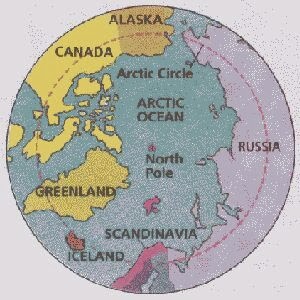
One of the present day Uralic descendents is Turkish language, which is widely spoken throughout Anatolia (Turkey), shares many Uralic language features such as, vowel harmony, agglutination, lack of grammatical gender, and SOV word order. The Proto-Germanic branch had never been a part of Anatolian branch because they had separated before the Black Sea flood. They would have driven out to Northern Germany and then up to Scandinavia. Throughout the long period of journey from Polar land to forest Steppes, the ancient Polar people had continuously been in touch with their Pre-Proto-Indo-European counterparts. Later in history, Indo-European tribes, with the emergence of Corded Ware and Battle Axe culture, invaded Scandinavia and replaced indigenous inhabitants and languages to further North.
PIE people actually have destroyed the civilized, farming, and peaceful Uralic society. Horse was certainly the prominent animal and the invention of wheels drastically changed the entire PIE civilizations. During this long period of history, PIE language assimilated different local variations and ethnic flavors and geographically distributed to all over Europe.
Proto Nordic people (Proto-Scandinavian) were Cro-Magnon racial type—tall, light hair and light eyes and a typical Europoid race. The Sami (indigenous people) is widely believed to be of Eurasian origin. Y-DNA haplogroup of European origin is common among all Northeastern (Latvia, Lithuania, Estonia) European nations. Two haplogroups, V and U56, dominate Sami region (carried by 89% of Sami) and are spread at moderate frequencies across Europe, from Ibeia to the Ural Mountains. Genetically, Sami are more close to Eastern Europeans and Finns but simultaneously show Western European and Eurasian chromosomal DNA haplogroups also. Sami is a heterogeneous group of people; few Samis appear like Mongolians. People from different geographic region came to Northern Scandinavia at different time period, so it depicts a wide range of physical features including: Indo Europeans, Germanic, Mongoloids (to some extent), and indigenous Sami.
Finno-Ugric is another branch of Uralic family of languages—distantly related to Sami-- widely spoken in Finnland. Though, Finno-Ugric is of late origin approximately 4,500 yrs old. Sami people are genetically close to Finns. The most common haplogroup among Sami is N1c with I1 as a close second. Haplogroup ‘I’ is exclusively found among European ancestry. Another important European haplogroup, R1a1a is common among eastern Europeans (speaking Indo-European language) while N1c is common among Finns (Finno-Ugric), and I1 is most common haplogroup in Sweedon. R1a1a particularly carried by Indo-Europeans (Steppes people) and spread to large region extending from South Asia and Southern Siberia to central Europe and Scandinavia.
Samoyedic language group, another Uralic branch, covers both sides of Ural Mountain and spanned in the area of Siberian coast and forest region. Proto-Uralic homeland is commonly hypothesized near Ural Mountains. Both the proto-languages, Sami & Samoyedic, have been derived from a common ancestor, which is certainly not Indo-European. The Samoyedic ethnic group further divided into North Samoyedic (northern Siberia) and South Samoyedic and occupied Tundra and forest region, respectively. Markedly, there is a subsistence relation among far north European, Sami, Samoyedic, extreme Far Eastern Yukaghir and Eskimo languages. All of these languages share few common traits and can be safely put in a separate language family.
Samoyedic language shares some common features with Turkic and Mongolian language, which are widely spoken at southwestern Siberia. The Turkic, Mongolian and Manchu-Tungus together compose the Altaic family. The Altaic and Uralic language family share structural similarities, some common vocabularies and agglutinate structure besides, few other salient features. Uralic and Altiac languages could be considered a sister language, which diverged from a common hypothetical ancestor known as Proto-Uralic.
The Turkic languages are spoken principally in Turkey, Armenia, and Azerbaijan and there is an extensive degree of mutual intelligibility between Turkic and Azerbaijani languages.

After last glacial maxim, the remnants of polar people have taken various migration routes and geographically distributed to Europe, Siberian arctic, Eurasiatic, North America, and far eastern Siberian coast. This led to geographic isolation of language groups and several thousand years contributed to the evolution of a distinct new languages and cultures. The Proto-Uralic language, ancestor of all Uralic language has unique agglutination (multiple suffixes and prefixes added) and SOV (Subject-Object-Verb) word order feature, and most descended languages inherited these features.
Samoyedic language genetically differs from Sami language but shares some common features with other Uralic family of languages. Samoyed, and other similar tribes, settled along the Arctic Circle, give Mongoloid appearances.
The Mongolians probably were the ancestors of Northern Siberian people, who migrated to far south because of ice coverage of Tundra region and came back when the climate become warmer and ice started to melt. During the last glaciations, the massive ice sheets, covered whole Polar and circumpolar region--expanded to Northern Europe, passed through Siberia and covered much of Northern America. The various tribes living in these area, speaking different variations of Uralic language, probably would have been extinct or would have penetrated the close proximal location and moved southwards.
Uralic speakers were the remnants of extensive populations, once lived in Polar or circumpolar region, who migrated over thousands of years in various geographic regions. Vast geographic distance and thousands of years of independent development made this Proto language to diverge into many different languages. However, these languages retained certain common traits from their ancestor source. Further worsen created by the rising of Indo-Europeans (Steppes Nomads) and these Uralic speakers were losing their languages to the Indo-Europeans; Finns and Sami have maintained their separate language identity until recent. Number of speakers for Uralic language is comparative small but its territorial expansion is wide.
Yukaghir is another Uralic language, which is at the verge of extinction. This language is spoken at extreme Northeastern Siberian Arctic coast. Yukaghir has extremely distant relationship with Samoyedic language. They are most ancient inhabitants of East Siberian Arctic and have long been isolated from other Uralic group. They are settled at extreme northeastern Tundra region and are close to extinct level. Yukaghir people are generally short, have dark hair and eyes, and medium pigmentation which are obvious features in arctic Mongolian. The major Uralic branch—Samoyed and Yukaghir—shows Mongoloid features. Nonetheless, Samis’ are typical Europeans majorly though, to some amount they too display Mongoloid features. In one way, it’s contradicting the long time belief of tall, slim, blond hair, and blue eyes Aryan race.
Language Hierarchy and Distribution
Deities, and Rituals:
Yukaghir worship Sun and various spirit deities. As per their popular belief, every family has sacred fire hearth in the center of their dwellings. The same custom was the common in ancient Germanic, Scandinavian, Sami, Celts and Balts (Eastern European: Latvia/Lithuania, Estonia) cultures. Spirits deities are widespread in Yukaghir, Scandinavian, Old Norse (Proto-Germanic), Sami and, various Siberian mythologies. Sami people had oral methodology for transferring religious knowledge and historical traditions to descending generations and the same oral tradition we found in Vedic Aryans. There is an incredible parallelism of mythic themes can be observed centered around Sun god , which suggest the idea of their primordial unity in the past.
Shamanism was the important part of their spiritual worldview which extended to other cultures also, though their role varies from one culture to the next. The Shamans are widely known as communicator between gods and people. These shamans were blessed to cure people with incurable diseases and to fulfill practical purposes with their special talents. We see traces of Baltic-Finnic shamanism tradition in ancient Vedic culture but it was particularly centered on healing. The Vedic twin’s god, Ashwin (universal healer god), was given a position above Indra (thunder & lightening god) with his 3-wheeled chariot, while the Indra was attributed with 2 wheeled chariot. The Sun, common principal god in Uralic culture, was given a top position with 4-wheeled chariot in early Vedic religion.
One religion that was very common among all circumpolar groups is Animal worship religion. It was a kind of religious rituals to glorify animal deities and which in later period converted into animal sacrifice rituals and widely spread to all Indo European regions. During the long period of history, animal was kept changing depending on the worth of an animal to a particular geography. In various Hindu mythologies, we see that every god is ascribed with a particular animal and is prayed along with the animal.
We can say that the religion in many respects is similar to all circumpolar groups. There is a considerable regional variation in the names and relationship to other gods. Horagallis—the god of thunder-- An important deity in the Sami pantheon is depicted as a person carrying hammer or an axe. And we are well aware of Thunder and Lightening god, widely known as ‘Thor’ to all Indo-European religion. Thunder & Lightening god, known as INDRA, revered for the life giving rain, was the principal god in earliest Vedic religion also. Both Uralic and Indo-European cultures share few other incredible parallelisms in mythologies, rituals, languages and spiritual views. This proves their long history of close linking and cultural impact on each other.
The most common feature carried by all descendents of Proto-Uralic language is ”agglutinatination”, meaning that multiple prefixes or suffixes can be added to a root word to create phrases or even sentences. Sumerian language is agglutinative. The language of Eskimos is also agglutinative. Vowel harmony is another common feature of Uralic languages, but on the contrary, Sami doesn’t comply this.
Language is not the only determinant associated with human evolution, though it always provides substantial logic to propound any historic theory. Archaeological findings help in analyzing the prehistoric culture and learning about the past. Both Archaeology and Linguistic are the scientific study of human evolution and cultural evolution to understanding human society and civilization. Major development in human history had started from Paleolithic culture. Some Paleolithic and Mesolithic cultures have been found at Poland, Germany, Scandinavia, and Eastern European sites with similar artifacts, tools, pottery design styles, and ritual beliefs. They were mainly Hunters-gatherers, fishers, reindeer and seal hunters but agricultural evidences also found at primary level. Hunting tools were mostly made of flints at northern and eastern Europe. Primary similarities among all these settlements were their burial rites. Boat burial was common where they placed the deceased in the hollow tree trunk, shaped like boat, and directly placed in the ground. Red ochre was widely used for burial on both humane and animals. Both cremation and burial were practiced—the boat was used to burn in the sea with diseased body. Somewhere it was marked with stones in boat shape on the surface of buried body. Funerary boat rituals or burning boat burial was attested at Scandinavia and resembled boat-shaped wooden coffin rituals for dead found in Latvia and Lithuania.
Besides humane, Dog has also given importance in burial rituals. Dog graves were prepared and gifted the same as humane grave. Dogs were often treated as invaluable and widely domesticated animals because of their aid or rather an assistance in hunting and pulling sledge on ice slopes. Dog was of the same value to Polar people as the Horse was to Indo-Europeans.